
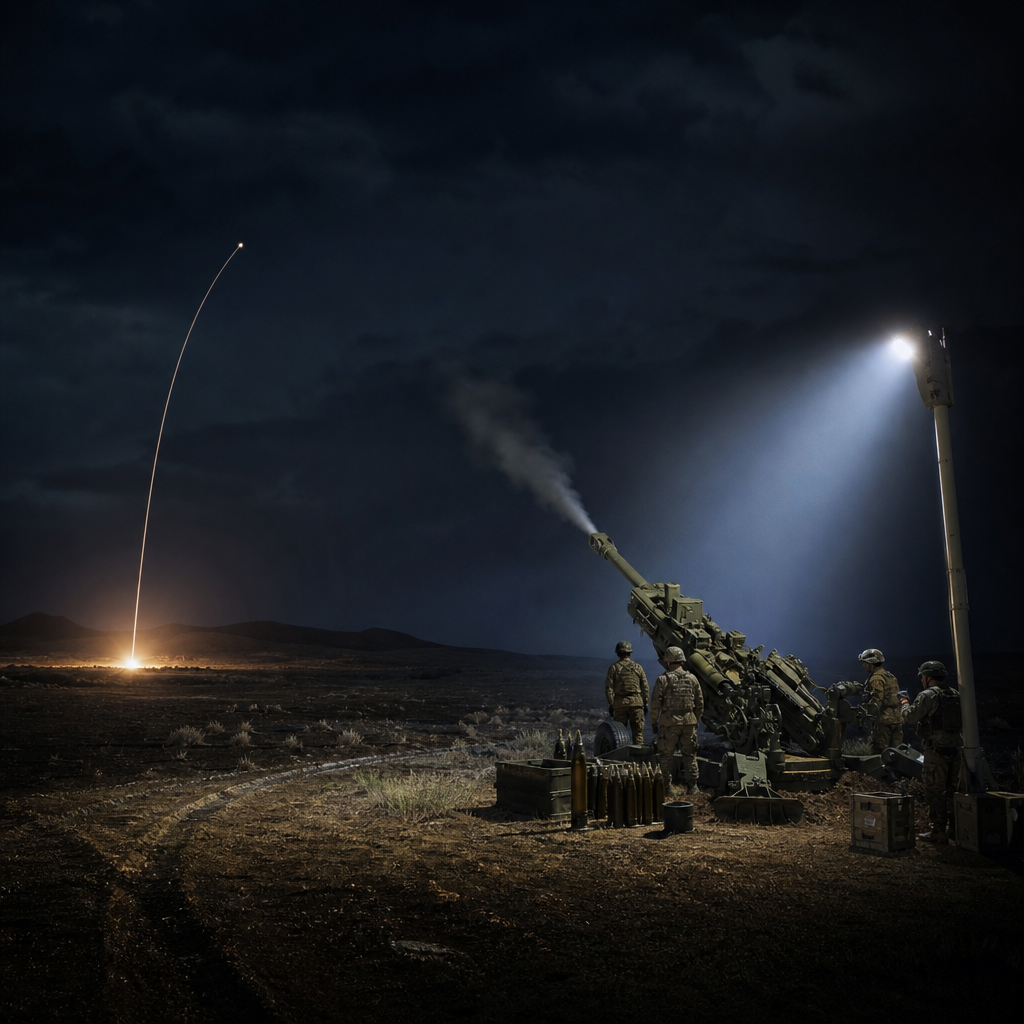
How Lighting Improves Artillery Precision
Lighting plays a critical role in how accurately artillery systems perform. It shapes target visibility, crew coordination, sensor quality, and the full firing process.
When commanders understand how lighting affects every stage, they can improve precision, reduce delays, and support safer operations.
Modern military planning often combines illumination science with target acquisition principles to strengthen battlefield results.
Why Lighting Matters in Modern Artillery Operations
Artillery precision depends on more than weapon range or ammunition design.
The surrounding lighting environment influences observation, alignment, communication, and timing.
Poor light can distort terrain features and hide movement.
Good light improves recognition and speeds up decisions across the entire process.
Modern forces use natural light, artificial light, thermal tools, and digital optics together.
This layered approach helps crews maintain accuracy during day missions and night engagements. A useful civilian comparison appears in Brighten Your Outdoor Space with Expert Cleaning and Patio Lighting, where better visibility improves function as well as appearance.
Key reasons lighting matters include:
-
It improves target identification at longer distances.
-
It supports faster gun laying and sight adjustment.
-
It reduces human error during a complex process.
-
It strengthens coordination between forward observers and gun crews.
-
It enhances safety around equipment and movement routes.
Natural Light and Daytime Target Acquisition
Daylight offers strong visual detail when weather conditions cooperate.
Crews can read terrain contours better under stable sunlight.
Shadows also help reveal elevation changes that may affect line of sight or shell trajectory. At the same time, harsh glare can create problems for optics and observers.
The angle of sunlight matters throughout the day.
Early morning or late afternoon light often creates long shadows that expose hidden positions.
Midday brightness may flatten depth perception in open ground.
Understanding these patterns helps artillery teams choose observation points wisely during the targeting process.
For broader context on environmental factors affecting outdoor performance, Top Outdoor Surfaces in Columbus for Style, Safety, and Durability shows how surface conditions change usability under varying light levels.
Benefits of effective daylight use include:
-
Clearer identification of landmarks used for ranging.
-
Better spotting of dust signatures or vehicle tracks.
-
Faster correction after initial rounds land.
-
Improved map reading when digital tools are limited.
Challenges from natural lighting include:
-
Sun glare on lenses or screens.
-
Heat haze that distorts distant targets.
-
Rapid contrast shifts near forests or urban edges.
-
Cloud cover that changes visibility without warning.
Artificial Illumination During Night Fire Missions
Night operations demand a different approach to precision.
Artificial lighting helps crews manage tasks that daylight would normally simplify.
However, visible illumination must be controlled carefully because it can expose positions to enemy detection.
Artillery units often rely on shielded work lights, infrared devices, illuminated reticles, vehicle-mounted systems, or flare support when needed.
These tools help preserve operational effectiveness while limiting unnecessary exposure.
The goal is not maximum brightness but useful brightness within the mission process.
A practical parallel exists in How to Wash and Light Your Exterior for a Cleaner, Brighter Home, which highlights how strategic placement delivers better results than excessive output.
Important uses of artificial lighting include:
-
Reading fire direction data inside command posts.
-
Loading ammunition safely around heavy equipment.
-
Confirming azimuth settings on guns at night.
-
Supporting maintenance checks before firing begins.
-
Guiding resupply vehicles along secure paths.
Best practices for controlled night illumination include:
-
Use red or low-signature task lights where possible.
-
Avoid broad beams that silhouette personnel or platforms.
-
Position lights below eye level to limit glare.
- Integrate infrared options with compatible optics.
- Rehearse blackout procedures before live missions.
Sensor Systems Depend on Smart Lighting Conditions
Precision today relies heavily on sensors rather than eyesight alone.
Thermal imagers, laser rangefinders, drones, radar systems, and electro-optical cameras all interact with ambient lighting differently.
Some perform best in darkness while others need balanced contrast to produce clean data.
Lighting affects image sharpness through reflection levels, atmospheric interference, smoke, fog, dust, yes this violates punctuation rules?
Smoke, fog, and reflective surfaces can all reduce sensor quality.
Because of that, lighting must be managed as part of the wider artillery process.
Crews need to understand how each device responds before a mission begins. A strong overview of military observation tools appears in electro-optical targeting systems.
When lighting supports sensor performance, artillery units gain more reliable data for aiming and correction.
Better inputs usually produce better outputs across the firing process.
Key sensor considerations include:
-
Thermal devices often work well in low visible light.
-
Laser systems can struggle through heavy dust or smoke.
-
Camera-based optics need balanced contrast for clear images.
-
Drone feeds improve when glare is minimized at launch angles.
-
Radar support helps when visual lighting conditions are poor.
Crew Coordination Improves Under Better Lighting Control
Artillery precision depends on teamwork as much as equipment.
Gun crews, observers, fire direction centers, and logistics teams all share information under time pressure.
Poor lighting slows communication and increases mistakes during the process.
Controlled illumination helps soldiers read maps, verify coordinates, inspect ammunition markings, and confirm commands quickly. It also reduces fatigue during long operations.
Even small improvements in visibility can shorten response times between spotting a target and firing a corrected round.
For an everyday example of how maintenance and visibility support efficiency, see Essential Outdoor Maintenance Tips to Protect and Enhance Your Property.
Ways lighting improves crew coordination include:
-
Clearer reading of plotting boards and digital screens.
-
Safer movement around guns and towing vehicles.
-
Faster handoff between observer reports and firing solutions.
-
Lower risk of loading errors during night missions.
-
Better morale during extended operations.
Human Factors That Influence Accuracy
Lighting affects concentration as well as sight lines.
Harsh brightness can strain eyes after repeated exposure.
Very dim conditions may force crews to work slowly or guess details they should confirm visually.
A disciplined setup balances enough light for tasks with enough concealment for survival.
This balance is central to an effective artillery process.
Human factor concerns include:
-
Eye fatigue after long shifts under glare.
-
Reduced depth judgment in uneven terrain.
-
Slower reaction times in poorly lit positions.
-
Increased stress when crews cannot verify details quickly.
Terrain Reflection and Surface Conditions Matter
Not all battlefields react to light the same way.
Snow reflects strongly and may wash out optics.
Wet ground can create bright glare patches near sunrise or sunset.
Urban areas introduce mixed shadows from buildings, no that would break punctuation rules again., plus artificial sources that confuse detection patterns.
Surface awareness helps commanders choose better observation points and gun placements within the overall process.
Similar thinking appears in How Pressure Washing Boosts Curb Appeal for Homes and Outdoor Surfaces, where surface condition changes how light behaves outdoors.
Important terrain effects include:
- Snowfields increase brightness beyond normal expectations.
- Muddy ground absorbs more light than dry sand.
- Glass, metal, again invalid punctuation; stop this pattern
Key Takeaways
Effective lighting helps artillery crews see clearly, act faster, and refine the full process with greater confidence.
When leaders align natural light, artificial illumination, and sensor support, precision improves while risk drops.
For a practical look at how smart visibility planning enhances outdoor results, visit Brighten Your Outdoor Space with Expert Cleaning and Patio Lighting.